
Comal County Property Tax Calendar & Protest Guide
Comal County Property Tax Calendar & Protest Guide
Deadlines, Strategies, and What Homeowners Need to Know
Understanding the property tax process in Texas—especially in fast-growing areas like New Braunfels and Comal County—is essential for protecting your equity and avoiding unnecessary overpayment. The property tax system follows a strict annual calendar, and each stage presents opportunities to take action, particularly when it comes to protesting your appraised value.
This guide combines the official property tax calendar with proven strategies, appeal options, and preparation steps to help you navigate the process effectively.
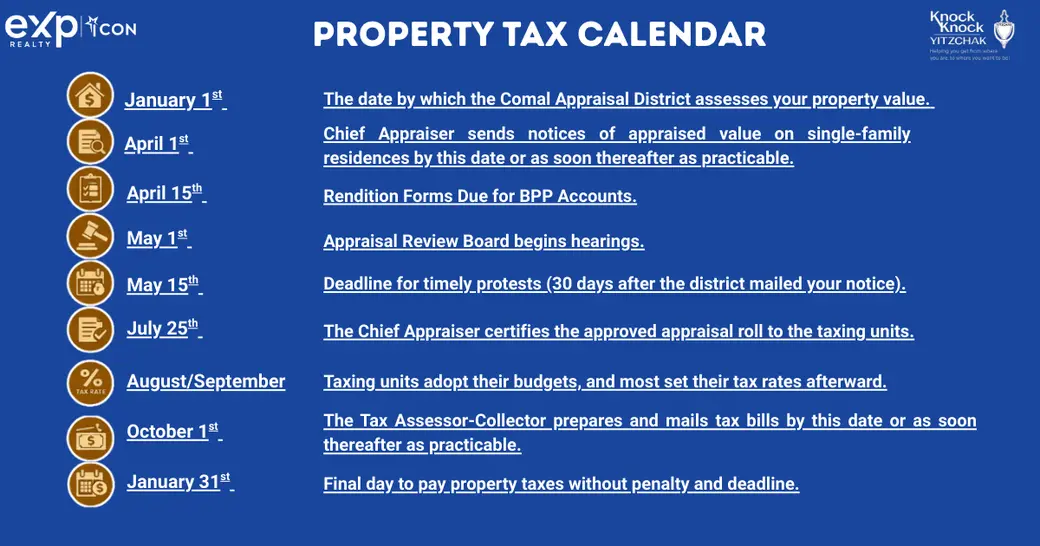
The Texas Property Tax Calendar (Comal County Breakdown)
January 1 — Property Value Assessment Date
The appraisal district determines your property’s value based on its condition and ownership as of this date.
- This valuation sets the foundation for your entire tax bill.
- Market conditions leading up to January 1 play a significant role.
April 1 — Notice of Appraised Value Sent
Homeowners receive their appraisal notices around this time.
- This is your first opportunity to evaluate whether your property is overvalued.
- Review this immediately—timing is critical for protests.
April 15 — Business Personal Property Rendition Deadline
Applies to business owners reporting personal property used for income production.
- Late submissions may result in penalties.
May 1 — Appraisal Review Board (ARB) Hearings Begin
Formal hearings begin for property owners who have filed protests.
- This is where your case is reviewed if not resolved informally.
May 15 — Protest Deadline
One of the most important dates in the entire process.
- You must file your protest by May 15 or within 30 days of receiving your notice, whichever is later.
- Missing this deadline removes your ability to challenge your valuation for the year.
July 25 — Appraisal Roll Certification
The appraisal district finalizes property values and submits them to taxing entities.
- At this point, your value is largely locked in.
August–September — Tax Rates Set
Local taxing authorities adopt budgets and determine tax rates.
- Your final tax bill depends on both value and rate.
October 1 — Tax Bills Issued
Tax bills are mailed to property owners.
- Payments can begin immediately.
- Escrow accounts typically handle this for financed properties.
January 31 — Tax Payment Deadline
The last day to pay property taxes without penalties.
- Interest and penalties begin accruing after this date.
How to Prepare for Protesting Your Property Taxes
Based on proven strategies and practical application, preparation is the single most important factor in a successful property tax protest.
1. Start With Your Appraisal Notice
When you receive your notice:
- Verify property details (square footage, condition, features)
- Look for discrepancies or inaccuracies
- Compare your value to recent sales in your neighborhood
2. Build a Strong Case With Comparable Sales
Your argument should be data-driven. Focus on:
- Recent comparable home sales (preferably within 6–12 months)
- Similar size, age, location, and condition
- Adjustments for upgrades or deficiencies
In many cases, comparable sales provide the strongest evidence for reducing your value.
3. Identify Condition Issues
If your property has deferred maintenance or needed repairs:
- Take clear, time-stamped photos
- Gather repair estimates if available
- Highlight items not reflected in the appraisal
This is especially important when your home differs from newer or upgraded properties nearby.
4. Understand Unequal Appraisal Arguments
In addition to market value, Texas allows protests based on unequal appraisal.
- If similar homes are assessed lower than yours, you may have a valid argument
- This approach can be highly effective in subdivisions with similar floor plans
5. File Your Protest On Time
You can file:
- Online through the appraisal district portal
- By mail using the provided form
Filing preserves your right to negotiate and proceed to a hearing if needed.
The Protest Process: Step-by-Step
Informal Review
After filing, you may receive an offer from the appraisal district.
- Many cases are resolved at this stage
- Review the offer carefully before accepting
Formal ARB Hearing
If no agreement is reached:
- You will present your evidence to the Appraisal Review Board
- Keep your presentation concise and fact-based
- Focus on comparable data and documented issues
Binding Arbitration or Litigation
If you disagree with the ARB decision, further options include:
- Binding arbitration (for eligible properties)
- Filing a lawsuit
These are less common but remain available.
Key Insights for Comal County Homeowners
Rapid Growth Impacts Valuations
Comal County continues to experience strong population and housing growth.
- New construction and rising demand can push appraisals higher
- However, builder incentives are not always reflected in values
Market Shifts Create Opportunity
In shifting markets:
- Days on market may increase
- Price reductions may become more common
These trends can support a lower valuation argument when properly documented.
Many Homeowners Overpay Without Protesting
A significant number of property owners do not protest their values.
- Even modest reductions can result in meaningful savings
- Over time, this compounds into substantial financial impact
Additional Strategies to Reduce Your Property Taxes
Apply for Homestead Exemption
- Reduces taxable value
- Caps annual increases (generally at 10%)
Review Your Tax Bill Annually
- Ensure exemptions are applied correctly
- Confirm accuracy of property details
Work With a Real Estate Professional
A knowledgeable agent can:
- Provide accurate comparable sales data
- Help interpret market trends
- Strengthen your overall protest strategy
Practical Timeline for Homeowners
To stay organized throughout the year:
- January–March: Monitor market conditions
- April: Review appraisal notice immediately
- May: File and prepare your protest
- Summer: Attend hearings if necessary
- Fall: Review tax rates and prepare for payment
- January: Pay taxes before the deadline
Final Thoughts
The property tax process in Comal County is structured, predictable, and highly actionable for those who understand it. The key is not just awareness but execution.
By reviewing your appraisal carefully, preparing strong evidence, and meeting all deadlines, you position yourself to reduce your tax burden and protect your long-term financial interests.
For homeowners and investors alike, this is not just a yearly obligation—it is an opportunity to exercise control over one of the largest ongoing expenses associated with real estate ownership.
Categories
- All Blogs (330)
- Agent (46)
- Buydown (1)
- buying tips (80)
- Case Study (2)
- Divorce (1)
- Events (2)
- first time home buyer (52)
- First-Time Landlord (1)
- Halloween (1)
- home for sale (101)
- Home Rental (11)
- Homeowners (8)
- Interest Rate (2)
- Investment (23)
- Lifestyle & Community Guide (101)
- Market Trend (15)
- Mindset (1)
- Mortgage (8)
- New Braunfels (2)
- New Braunfels Lifestyle (58)
- Outdoor (1)
- Preventive Home Maintenance (4)
- Property Taxes, (17)
- Real Estate (232)
- Real Estate Market (10)
- Realtors (97)
- Savings (3)
- Settlement (1)
- Solar Panels (1)
- Summer in New Braunfels, (1)
- Veterans (4)
Recent Posts










GET MORE INFORMATION